



Drug Info
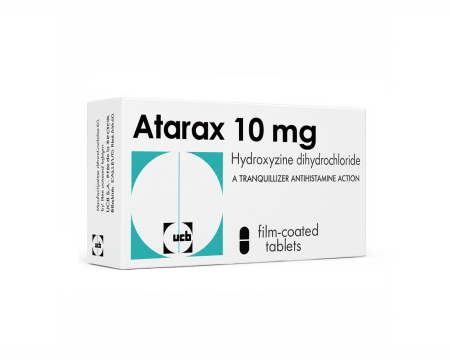
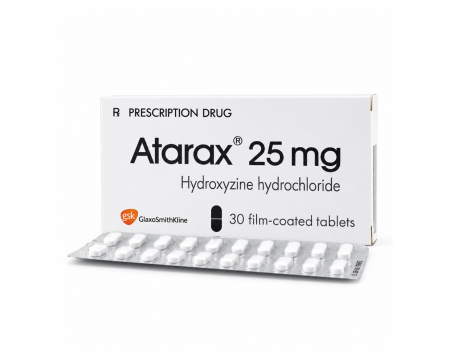
- Brand Name: Atarax
- Active Ingredient: Hydroxyzine Hydrochloride
- Manufacturer: UCB Pharma
Atarax and its active substance, Hydroxyzine Hydrochloride
Hydroxyzine antagonizes peripheral H1 histamine receptors, reducing pruritus and wheal formation, and exhibits central anxiolytic/sedative effects through modulation of histaminergic and other neurotransmitter systems. Mild anticholinergic activity contributes to dryness and sedation. After oral administration, onset typically occurs within 30–60 minutes with peak effect soon thereafter, which is useful for evening itching or pre-procedure calming. Hydroxyzine is hepatically metabolized (one metabolite is cetirizine); elimination is via urine/feces. Because the drug can prolong QT in susceptible individuals, clinicians review cardiac history, electrolytes, and interacting medicines before higher doses or long courses.
Indications for use
Use is determined by the prescriber according to regional labeling and individual assessment:
- Pruritus associated with allergic conditions (e.g., atopic dermatitis, urticaria)
- Short-term management of anxiety and tension (symptomatic relief)
- Sedation/antiemetic adjunct in pre- and post-operative settings
- Adjunct in nausea/vomiting where clinically appropriate
Treatment regimens and dosages
Use Atarax exactly as prescribed. Representative adult oral schedules (tablet strengths commonly 10 mg and 25 mg; the prescriber adjusts to response and tolerability):
- Pruritus due to allergy: often 25 mg at night, then 25 mg 3–4 times daily as needed (typical total 75–100 mg/day).
- Short-term anxiety/tension: 50–100 mg/day in divided doses (e.g., 25 mg 3–4 times daily). Some patients respond to lower totals.
- Pre-/post-operative sedation or antiemetic adjunct: single 50–100 mg dose before the procedure (timing per clinician), with or without smaller follow-up doses.
Older adults/frail patients: start at the lowest effective dose (e.g., 10–25 mg at night, careful titration).
Pediatrics (clinician-directed): dosing is age/weight-based; common total daily limits are ≤50 mg/day in children ≤6 years, and 50–100 mg/day in children >6 years, given in divided doses.
Administration: take at consistent times. For daytime use, schedule doses to minimize interference with work or driving; many patients favor evening dosing for pruritus or insomnia-related symptoms.
Recommendations for use
- For itching, pair medication with skin care: lukewarm showers, fragrance-free emollients, and avoidance of known triggers.
- For anxiety, combine with simple routines (regular sleep, reduced caffeine).
- Avoid alcohol and unnecessary sedatives; plan dose timing to reduce daytime drowsiness.
- Keep a brief diary (dose time, symptom scores, drowsiness, any palpitations) to optimize dose and timing at follow-up.
Missed Dose
Take the missed dose when remembered the same day unless it is near the next dose. Do not double. Resume the regular schedule.
Precautions
- Somnolence and impaired alertness: assess your response before driving or hazardous tasks.
- Cardiac risk/QT prolongation: caution in patients with known QT prolongation, significant bradycardia, recent myocardial infarction, or electrolyte abnormalities; avoid combining with other QT-prolonging drugs (see Interactions).
- Anticholinergic effects: dry mouth, constipation, blurred vision, urinary retention—heightened risk in benign prostatic hyperplasia, narrow-angle glaucoma, pyloroduodenal obstruction.
- Elderly: increased sensitivity to sedation, confusion, and anticholinergic effects—use the lowest effective dose.
- Hepatic/renal impairment: dose reduction or extended intervals may be considered.
- Hypersensitivity: avoid if allergic to hydroxyzine, cetirizine, or levocetirizine.
Use during pregnancy
Use is individualized. Many authorities advise avoiding hydroxyzine in early pregnancy; later-pregnancy decisions weigh maternal benefit and fetal risk. During breastfeeding, small amounts may pass into milk; clinicians assess case by case and monitor infants for sedation or feeding difficulty.
Possible side effects
- Common: drowsiness, fatigue, dry mouth, headache, dizziness, gastrointestinal discomfort.
- Less common: blurred vision, constipation, urinary retention, confusion (especially in elderly).
- Serious—seek medical attention: palpitations or syncope (possible QT prolongation), severe allergic reaction (rash, facial swelling, wheeze), pronounced urinary retention, persistent confusion.
Track timing/severity and relation to doses; share with your clinician to refine the regimen.
Hydroxyzine: interaction with other drugs
- CNS depressants (benzodiazepines, opioids, sedating antihistamines, alcohol): additive sedation/respiratory depression—avoid or use with strict medical guidance.
- QT-prolonging medicines (e.g., certain macrolides, fluoroquinolones, antipsychotics, methadone, some antiarrhythmics): additive arrhythmia risk.
- Anticholinergics (e.g., tricyclics, antimuscarinics): increased dry mouth, constipation, urinary retention, blurry vision.
Always provide your clinician with a full list of prescription/OTC medicines and supplements.
Analogs & Generics
Same active ingredient (hydroxyzine — international examples)
- Hydroxyzine HCl tablets (Teva, Sandoz/Hexal, Accord/Actavis, Viatris/Mylan) — 10 mg, 25 mg
- Hydroxyzine pamoate capsules (brand example: Vistaril; strengths vary by region)
Drug analogs (different active ingredient, same therapeutic purpose — chosen by indication)
- For pruritus/allergic symptoms: Cetirizine, Loratadine, Fexofenadine, Levocetirizine (less sedating antihistamines)
- For short-term anxiety (clinician-selected): Buspirone, Propranolol for somatic symptoms, or other agents per guidelines; long-term management often relies on psychotherapy and SSRIs/SNRIs when indicated.
Storage
Store at 15–25°C in a dry place away from heat and sunlight. Keep tablets in the original packaging and out of the reach of children. Do not use after the expiry date printed on the pack.
Customer Experience – What to Expect
Many patients feel reduced itching and easier sleep within 1–2 hours of the first dose for allergic dermatoses. For short-term anxiety, calming and improved sleep are often noted early; daytime drowsiness can be minimized by adjusting timing and total dose with the prescriber. Mouth dryness is common at the start and may ease with hydration or dose adjustments. Keeping a simple log (dose time, symptom scores, drowsiness, any palpitations) helps fine-tune therapy.
FAQ
How fast does Atarax work?
Onset is typically 30–60 minutes after an oral dose; peak effect follows soon after.
Is it addictive?
No. Hydroxyzine is non-habit-forming, but it can be sedating.
Can I drive after taking it?
Assess your own response first. Avoid driving or hazardous tasks if you feel drowsy.
Can I take it with alcohol?
Avoid alcohol and unnecessary sedatives due to additive CNS depression.
What if my skin still itches at night?
Discuss an evening-weighted schedule (e.g., higher bedtime dose within the prescribed daily maximum) and continue skin-care measures.
Is Atarax the same as Vistaril?
Both contain hydroxyzine (different salts/formulations). Your clinician will choose based on availability and tolerability.
The best offer for Atarax online on the market
Right now you can buy Atarax in our online pharmacy. If you are looking for the best place to order Atarax or other medicines containing hydroxyzine, then you have come to the right place.
Advantages of our pharmacy:
- Confidentiality. Most people prefer to keep treatment private. By ordering Atarax online, you avoid unnecessary face-to-face discussions.
- Price. Buying Atarax online is more beneficial than purchasing at a clinic or local pharmacy.
- Quantity. Doctors often issue a prescription for one or two packs. Our pharmacy allows you to buy the required number of Atarax packs to ensure an adequate supply.
- Convenience. You make a purchase at a convenient time for you, without sacrificing service or security. You do not need to make an appointment or visit a clinic.
- Information. On our website, you can find details on dosage, side effects, safe use, and other information necessary for treatment.
We work hard to provide the best possible customer service and to ensure that our medications help relieve allergic itching, reduce short-term anxiety, and support safe procedural sedation under medical supervision.









