

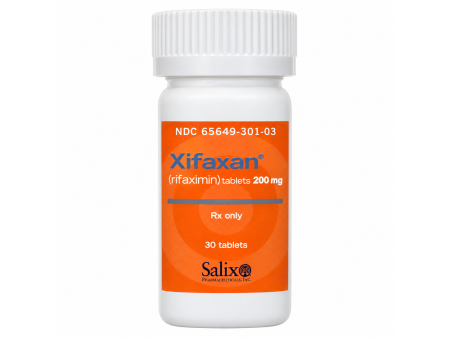
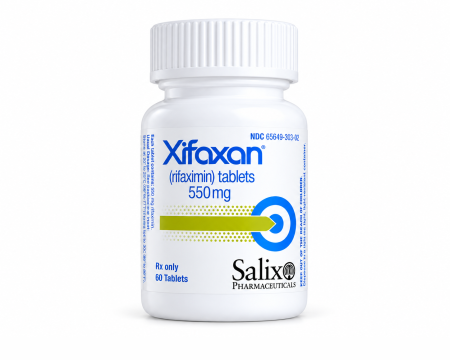


Drug Info
- Brand Name: Xifaxan
- Active Ingredient: Rifaximin
- Manufacturer: Bausch Health (Salix Pharmaceuticals)
Xifaxan and its active substance, Rifaximin
Rifaximin is a non-systemic rifamycin derivative that binds the β-subunit of bacterial RNA polymerase, blocking RNA synthesis and inhibiting bacterial growth. Its crystalline polymorph (alpha form) has very low oral bioavailability, so activity is concentrated in the GI tract. This local action limits systemic adverse effects and drug–drug interactions compared with many oral antibiotics.
Beyond direct antibacterial effects, rifaximin appears to modulate the gut microbiome and intestinal epithelial function. In IBS-D, these actions may reduce gas production and mucosal immune activation, helping normalize motility and visceral sensitivity. In hepatic encephalopathy, suppressing urease- and ammonia-producing bacteria decreases intestinal ammonia load that contributes to neurocognitive symptoms in cirrhosis. Pharmacokinetically, fecal concentrations remain high; plasma levels are typically negligible but may rise in severe hepatic impairment or with P-gp inhibitors (e.g., cyclosporine). The drug is excreted mainly in feces as unchanged compound.
Indications for use
Use is determined by your clinician according to regional labeling and individual assessment:
- Traveler’s diarrhea (TD) due to noninvasive Escherichia coli in adults
- IBS-D in adults to improve global symptoms (abdominal pain and diarrhea)
- Hepatic encephalopathy (HE): reduction in the risk of overt HE recurrence; often used with lactulose
- Other specialist-directed uses may exist regionally (e.g., small intestinal bacterial overgrowth protocols), at the prescriber’s discretion
Xifaxan is not appropriate when TD is accompanied by fever or bloody stools (possible invasive pathogens); alternative evaluation is needed.
Treatment regimens and dosages
Use Xifaxan exactly as prescribed. Representative adult oral schedules (tablets 200 mg and 550 mg; clinicians adjust by indication and patient factors):
- Traveler’s diarrhea (noninvasive E. coli):
200 mg three times daily for 3 days. Begin at the onset of symptoms. Maintain hydration; seek care if fever, blood in stool, or no improvement. - IBS-D (adults):
550 mg three times daily for 14 days. If symptoms recur, clinicians may consider retreatment courses at intervals. - Hepatic encephalopathy (recurrence reduction):
550 mg twice daily as chronic therapy, commonly with lactulose to maintain 2–3 soft stools/day.
Hepatic impairment: systemic exposure increases with worsening liver function; prescribers use caution and monitor.
Renal impairment: no routine adjustment (minimal renal clearance), but overall clinical status guides use.
Administration: swallow with water, with or without food, at regular times. Do not shorten a prescribed course even if you feel better.
Recommendations for use
Build a simple routine around dose times (alarms, pill organizer). For IBS-D, pair the course with steady hydration and nutrition (regular meals, limited alcohol/caffeine if they aggravate symptoms). For traveler’s diarrhea, follow safe-food practices and oral rehydration; carry tablets during travel for rapid start at first loose stools without systemic infection signs. For hepatic encephalopathy, keep a diary of sleep-wake patterns, attention, and stool frequency; family members can help spot early cognitive changes. Contact your clinician for persistent or worsening symptoms, or if new fever, bloody diarrhea, or severe abdominal pain occurs.
Missed Dose
Take the missed dose when remembered the same day. If it is close to the next dose, skip the missed one—do not double. Resume your regular schedule.
Precautions
- Invasive diarrhea/fever/bloody stools: Xifaxan is not indicated—seek medical evaluation for possible invasive bacterial or parasitic infection.
- Severe hepatic impairment: systemic exposure may rise; clinicians monitor closely for adverse effects.
- Hypersensitivity: avoid if allergic to rifaximin or other rifamycins (e.g., rifampin). Discontinue and seek care for rash, facial swelling, wheeze.
- C. difficile–associated diarrhea: rare with rifaximin’s local action, but any antibiotic can precipitate it. Report persistent watery or bloody diarrhea, abdominal cramps, or fever.
- Driving/alert tasks: dizziness or fatigue are uncommon; assess your personal response.
Use during pregnancy
Data in pregnancy are limited; decisions are individualized. Because systemic absorption is minimal in most patients, some clinicians may consider use when expected benefits outweigh risks. Discuss plans for pregnancy or breastfeeding; monitor infants for GI upset if exposure occurs via breast milk.
Possible side effects
- Common: nausea, flatulence, abdominal pain, headache, defecation urgency, peripheral edema (usually mild).
- Less common: dizziness, fever, constipation, rash, pruritus.
- Serious—seek medical attention: severe or persistent diarrhea (possible C. difficile), significant abdominal pain with fever, allergic reactions.
Track onset, severity, and relation to meals or dose timing; this helps your clinician tailor future courses.
Rifaximin: interaction with other drugs
Systemic interactions are uncommon due to minimal absorption, but consider:
- Strong P-gp inhibitors (e.g., cyclosporine): can increase rifaximin exposure—clinician monitoring advised.
- Warfarin/coumarins: isolated reports of INR changes—check INR when starting/stopping rifaximin.
- Other rifamycins: avoid combined use without specialist direction.
Always provide your clinician with a complete list of prescription/OTC medicines, vitamins, and herbal supplements.
Analogs & Generics
Same active ingredient (rifaximin — international examples)
- Rifaximin tablets 200 mg / 400 mg / 550 mg (various manufacturers)
- Normix (rifaximin; market-dependent brand)
- Xifaxan generics where available (regional)
Drug analogs (different active ingredient, same therapeutic purpose—chosen by indication)
- Traveler’s diarrhea (noninvasive pathogens): Azithromycin; Ciprofloxacin/Levofloxacin (region- and resistance-dependent; clinician-directed).
- IBS-D symptom control (non-antibiotic options): Loperamide, Eluxadoline (adult, specialist-directed), Bile-acid sequestrants (e.g., cholestyramine) for bile-acid diarrhea, Alosetron (restricted-use programs in some regions).
- Hepatic encephalopathy recurrence reduction: Lactulose (first-line), Neomycin or Metronidazole (specialist alternatives when needed).
Storage
Store at 15–25°C in a dry place away from direct heat and sunlight. Keep tablets in the original packaging and out of the reach of children. Do not use after the expiry date printed on the blister/carton.
Customer Experience – What to Expect
- Traveler’s diarrhea: many users see fewer stools and less urgency within 24–48 hours when treatment begins promptly and invasive infection is absent. Hydration aids recovery.
- IBS-D: symptom relief typically develops over the 14-day course and may persist after completion; some patients need repeat courses for relapses as directed by their clinician. Bloating and urgency often improve alongside abdominal pain scores.
- Hepatic encephalopathy: families frequently report clearer thinking and steadier sleep-wake cycles over days to weeks when rifaximin is added to lactulose; adherence to both medicines is key.
Most side effects, when they occur, are GI-related and mild. A brief symptom diary (stool count/urgency, abdominal pain score, mental clarity for HE) helps confirm benefit and guide future plans.
FAQ
Does Xifaxan treat all causes of traveler’s diarrhea?
No. It is intended for noninvasive E. coli. If you have fever or bloody stools, seek evaluation for invasive pathogens—different therapy is required.
Can I repeat Xifaxan for IBS-D if symptoms return?
Clinicians may prescribe repeat 14-day courses for recurrences at intervals. Follow your prescriber’s plan.
Will it interact with my other medicines?
Significant interactions are uncommon. Tell your clinician about warfarin, cyclosporine, or other critical medicines to plan monitoring.
Do I need probiotics with it?
Some patients choose them; evidence varies. If used, separate dosing by several hours and watch for bloating.
Is alcohol allowed?
Moderation is sensible, especially with IBS-D. Hydration is more important during TD recovery.
What if I have cirrhosis and take rifaximin for HE?
Continue as prescribed, usually with lactulose. Keep 2–3 soft stools daily and arrange regular follow-ups.
The best offer for Xifaxan online on the market
Right now you can buy Xifaxan in our online pharmacy. If you are looking for the best place to order Xifaxan or other medicines containing rifaximin, then you have come to the right place.
Advantages of our pharmacy:
- Confidentiality. Most people prefer to keep gastrointestinal or liver-related treatment private. By ordering Xifaxan online, you avoid unnecessary face-to-face discussions.
- Price. Buying Xifaxan online is more beneficial than purchasing at a clinic or local pharmacy.
- Quantity. Doctors often issue a prescription for one or two packs. Our pharmacy allows you to buy the required number of Xifaxan packs to ensure an adequate supply.
- Convenience. You make a purchase at a convenient time for you, without sacrificing service or security. You do not need to make an appointment or visit a clinic.
- Information. On our website, you can find details on dosage, side effects, safe use, and other information necessary for treatment.
We work hard to provide the best possible customer service and to ensure that our medications help manage IBS-D, traveler’s diarrhea, and hepatic encephalopathy safely and effectively under medical supervision.









