



Drug Info
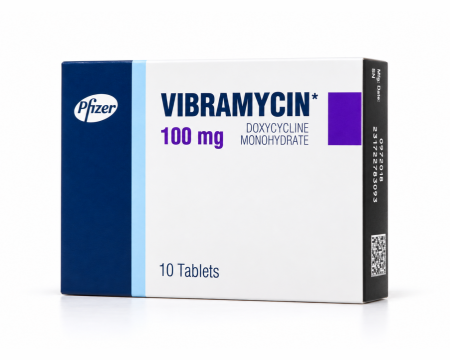
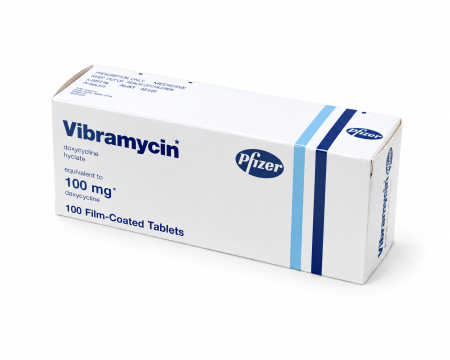
- Brand Name: Vibramycin
- Active Ingredient: Doxycycline
- Manufacturer: Pfizer Inc.
Vibramycin and its active substance, Doxycycline
Doxycycline is a semisynthetic tetracycline that binds to the 30S ribosomal subunit of bacteria, blocking aminoacyl-tRNA attachment and halting protein synthesis. Compared with older tetracyclines, doxycycline is more lipophilic and has a longer half-life, which supports once- or twice-daily dosing. It concentrates well in respiratory and skin tissues and has activity against many Gram-positive and Gram-negative organisms, atypicals (e.g., Mycoplasma, Chlamydia), and several vector-borne pathogens (Rickettsia, Borrelia).
Absorption is reliable by mouth. While doxycycline is less affected by food and dairy than classical tetracycline, polyvalent cations (iron, calcium, magnesium, aluminum, zinc, bismuth) can still reduce uptake. Take with a full glass of water and keep upright for at least 30 minutes to minimize esophageal irritation. The drug is primarily eliminated via the gastrointestinal tract with some renal contribution, which is helpful in mild-to-moderate kidney impairment. A predictable class effect is photosensitivity; protective clothing and sunscreen are recommended.
Indications for use
Vibramycin is prescribed for susceptible infections such as:
- Acute bacterial bronchitis and exacerbations of chronic bronchitis, community-acquired pneumonia (pathogen-directed use)
- Sinusitis and selected otolaryngologic infections where doxycycline is appropriate
- Skin and soft-tissue infections, including infected acne and folliculitis caused by susceptible organisms
- Uncomplicated urogenital chlamydia and non-gonococcal urethritis/cervicitis (per local guidelines)
- Tick-/vector-borne diseases: rickettsioses, early Lyme disease, ehrlichiosis; specialist-directed prophylaxis/treatment as indicated
- Other labeled or guideline-supported uses at the prescriber’s discretion (e.g., malaria prophylaxis in specific regions, ocular rosacea/blepharitis as anti-inflammatory therapy)
Use is determined by your clinician according to regional labeling, pathogen susceptibility, and individual assessment.
Treatment regimens and dosages
Use Vibramycin exactly as prescribed. Representative adult oral schedules (the prescriber may adjust based on infection and response):
- General infections (typical start):
Day 1: 200 mg total (e.g., 100 mg twice daily).
Then: 100 mg once daily or 100 mg twice daily depending on severity and organism.
Usual duration: 7–14 days; some infections need longer. - Uncomplicated chlamydial infection:
100 mg twice daily for 7 days (or as per local guidance). - Early Lyme disease (erythema migrans):
100 mg twice daily for 10–21 days, per prescriber judgment and local protocols. - Acne (infected/inflammatory):
50–100 mg once or twice daily, with regular review and the shortest effective duration to limit resistance. - Malaria prophylaxis (region-specific):
100 mg once daily, starting 1–2 days before travel, throughout exposure, and 4 weeks after leaving the endemic area—specialist guidance required.
General rules: swallow with plenty of water; take with food if stomach upset occurs (avoid taking together with iron, calcium, magnesium, zinc, or bismuth products). Do not lie down for 30 minutes after dosing. Avoid exceeding the prescribed dose or shortening/lengthening the course on your own.
Recommendations for use
Create a dosing routine (e.g., 08:00 and 20:00 for twice-daily courses). Separate Vibramycin from antacids, iron preparations, calcium/iron-rich supplements, zinc or magnesium by at least 2 hours before or 4–6 hours after to protect absorption. Limit sun exposure and use sunscreen due to photosensitivity risk. If esophageal irritation or heartburn appears, ensure doses are taken with water while upright and avoid late-night dosing right before bed. For acne or longer courses, review with your clinician every few weeks to confirm continued need and to reinforce non-antibiotic measures (skin hygiene, comedolytics as appropriate).
Missed Dose
If you miss a dose, take it when remembered unless it is close to the next dose. Do not double the next dose. Resume your regular schedule and complete the full course. If multiple doses are missed, contact your clinician for advice.
Precautions
- Pregnancy and children: tetracyclines are contraindicated during pregnancy and in children under 8 years due to risks to bone/teeth (enamel hypoplasia, discoloration). If pregnancy occurs, contact your clinician promptly.
- Esophagitis/esophageal ulceration: take with water and remain upright for ≥30 minutes after dosing.
- Photosensitivity: increased sunburn risk—use protective clothing and sunscreen; avoid tanning beds.
- Benign intracranial hypertension (pseudotumor cerebri): severe persistent headache, visual changes, or pulsatile tinnitus require urgent evaluation; risk increases with concomitant retinoids (see Interactions).
- C. difficile–associated diarrhea: severe or persistent diarrhea during or after therapy needs medical assessment.
- Hepatic/renal considerations: caution in severe hepatic dysfunction; dose considerations in significant renal impairment per prescriber.
- Allergy: do not use if you have a known hypersensitivity to tetracyclines.
Use during pregnancy
Vibramycin is not recommended during pregnancy. If you may become pregnant, discuss reliable contraception before starting. For breastfeeding, decisions are individualized; tetracyclines can deposit in developing teeth—seek clinician guidance.
Possible side effects
- Common: nausea, abdominal discomfort, vomiting, diarrhea, loss of appetite, photosensitivity, headache.
- Less common: esophageal irritation/ulceration, dizziness, candidiasis (oral/vaginal), rash.
- Rare/serious (seek care): severe or persistent headache/visual changes (possible intracranial hypertension), severe skin reactions, anaphylaxis/angioedema, marked diarrhea (possible C. difficile), hepatotoxicity, hemolytic anemia.
Record onset and severity and share with your clinician; dose timing with food and mineral separation often improves tolerability.
Doxycycline: interaction with other drugs
- Antacids/iron/calcium/magnesium/zinc/bismuth: reduce absorption—separate by 2 hours before or 4–6 hours after dosing.
- Warfarin and other coumarins: may potentiate anticoagulation—INR monitoring and dose adjustment may be needed.
- Oral retinoids (isotretinoin, acitretin) and high-dose vitamin A: increased risk of pseudotumor cerebri—avoid combination.
- Enzyme inducers (e.g., carbamazepine, phenytoin, barbiturates): may lower doxycycline levels—clinician will assess dosing.
- Penicillins: possible antagonism of bactericidal activity—avoid co-use for the same infection unless directed.
- Oral hormonal contraceptives: breakthrough bleeding has been reported; some clinicians advise backup contraception during and for 7 days after therapy—confirm with your prescriber.
Always provide your clinician with an up-to-date list of prescription/OTC medicines, vitamins, and supplements.
Analogs & Generics
Same active ingredient (doxycycline — international examples; availability varies by market)
- Doxycycline hyclate 100 mg capsules/tablets (Teva, Sandoz/Hexal, Accord/Actavis, Viatris/Mylan) — standard strengths for once- or twice-daily courses
- Doryx (doxycycline hyclate delayed-release) — delayed-release tablets/capsules (brand; region-specific)
- Doxycycline monohydrate tablets/capsules — alternative salt form with similar indications
- Vibramycin dispersible/suspension (market-dependent) — for patients who need non-solid forms
- Available in our catalog: Vibramycin Generic 100 mg capsules — listed in our current price file as an option for clinician-directed therapy
Drug analogs (different active ingredient, same purpose — antibiotic therapy chosen by pathogen)
- Minocycline — tetracycline-class alternative (e.g., acne, skin infections)
- Amoxicillin/clavulanate — β-lactam/β-lactamase inhibitor for respiratory/ENT/skin indications
- Azithromycin — macrolide for respiratory/STI indications where appropriate
- Levofloxacin — fluoroquinolone reserved for specific infections/resistance patterns
- Clarithromycin / Lymecycline / Trimethoprim-sulfamethoxazole — selected alternatives per culture and guideline
Storage
Store at 15–25°C in a dry place away from direct heat and sunlight. Keep tablets/capsules in the original packaging and out of the reach of children. Do not use after the expiry date printed on the pack.
Customer Experience – What to Expect
Many patients feel symptom relief within 48–72 hours of starting Vibramycin for susceptible infections (less cough or sputum, reduced tenderness/redness of skin lesions, easing of urinary discomfort). Photosensitivity is the effect noticed most often—sun protection prevents setbacks. For throat or esophageal discomfort, adjusting technique (full glass of water, staying upright) usually helps quickly. In acne regimens, clinical change is gradual over several weeks, with maximal benefit by 8–12 weeks alongside skin-care measures. Keep a simple log of doses, meals, mineral supplements, sun exposure, and symptoms; this helps your clinician adjust timing, dose, or duration precisely.
FAQ
Can I take Vibramycin with food or milk?
You may take it with a light meal to reduce stomach upset, but avoid taking it together with dairy, iron, zinc, magnesium, aluminum, or bismuth products; separate by the intervals listed above.
Why do I need to stay upright after taking it?
To prevent esophageal irritation. Take with plenty of water and remain upright for ≥30 minutes.
Do I need sun protection?
Yes. Doxycycline can cause photosensitivity. Use sunscreen and protective clothing and avoid tanning beds.
Will it affect my birth control?
Breakthrough bleeding has been reported; some clinicians recommend backup contraception during therapy and for 7 days after. Confirm with your prescriber.
What if diarrhea starts during treatment?
If mild, increase fluids and monitor. If persistent, severe, bloody, or accompanied by fever, seek medical care (possible C. difficile).
Can children take Vibramycin?
Tetracyclines are generally avoided under age 8 due to tooth/bone effects. Pediatric use is specialist-directed.
The best offer for Vibramycin online on the market
Right now you can buy Vibramycin in our online pharmacy. If you are looking for the best place to order Vibramycin or other medicines containing doxycycline, then you have come to the right place.
Advantages of our pharmacy:
- Confidentiality. Most people prefer to keep infection treatment private. By ordering Vibramycin online, you avoid unnecessary face-to-face discussions.
- Price. Buying Vibramycin online is more beneficial than purchasing at a clinic or local pharmacy.
- Quantity. Doctors often issue a prescription for one or two packs. Our pharmacy allows you to buy the required number of Vibramycin packs to ensure an adequate supply.
- Convenience. You make a purchase at a convenient time for you, without sacrificing service or security. You do not need to make an appointment or visit a clinic.
- Information. On our website, you can find details on dosage, side effects, safe use, and other information necessary for treatment.
We work hard to provide the best possible customer service and to ensure that our medications help resolve bacterial infections safely and effectively under medical supervision.









