



Drug Info
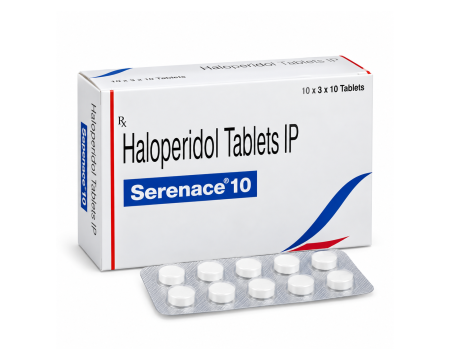
- Brand Name: Haloperidol
- Active Ingredient: Haloperidol
- Manufacturer: Originator by Janssen
Haloperidol and its active substance, Haloperidol
Haloperidol is a butyrophenone antipsychotic that competitively antagonizes dopamine D₂ receptors in the brain. Mesolimbic D₂ blockade reduces psychotic symptoms; striatal blockade explains dose-related EPS (acute dystonia, akathisia, parkinsonism). Modest antagonism at α₁-adrenergic and 5-HT₂ receptors contributes to clinical effects and side-effect profile (orthostatic symptoms are possible; anticholinergic effects are minimal compared with phenothiazines).
After oral administration, haloperidol is well absorbed. It undergoes extensive hepatic metabolism via CYP3A4 and CYP2D6, with glucuronidation and ketone reduction pathways also involved. The elimination half-life is long enough to allow once- or twice-daily dosing after stabilization. Because metabolism varies among individuals (e.g., with CYP2D6 polymorphisms, smoking, or co-medications), dosing is adjusted to clinical response and tolerability. High doses or parenteral use can prolong the QT interval and increase torsades de pointes risk, particularly with electrolyte abnormalities or interacting drugs—this is why ECG consideration is part of higher-risk regimens.
Indications for use
Use is determined by the prescriber according to regional labeling and individual assessment:
- Schizophrenia (acute treatment and maintenance)
- Acute psychosis and severe agitation (short-term control; oral regimens for outpatients, parenteral regimens in supervised settings)
- Mania (adjunct or short-term control of agitation; specialist-directed)
- Tourette’s disorder and severe tics when other measures are insufficient
- Huntington’s chorea (symptomatic control in selected patients, specialist-directed)
Not approved for behavioral problems in elderly patients with dementia-related psychosis due to increased mortality risk (class warning).
Treatment regimens and dosages
Use Haloperidol exactly as prescribed. Representative adult oral schedules (clinician-directed; tablet strengths commonly 0.5–10 mg):
- Schizophrenia / acute psychosis (oral):
Start 0.5–2 mg two or three times daily; increase in small steps every 1–7 days to effect. Typical maintenance total 3–10 mg/day in divided doses; some patients require higher doses (up to ~20 mg/day) with careful monitoring. - Severe agitation (oral loading in outpatient settings):
1–5 mg per dose, repeated as directed at intervals to calm agitation; convert to the lowest effective maintenance dose once stable. - Tourette’s disorder / severe tics:
Start 0.5 mg once or twice daily; titrate slowly to 1–4 mg/day in divided doses per response and tolerability. - Elderly or frail patients / hepatic impairment:
Start 0.25–0.5 mg once or twice daily with very gradual titration.
Switching and maintenance: once symptoms are controlled, clinicians often consolidate to once-daily evening dosing to reduce daytime sedation/EPS fluctuations. For long-term relapse prevention, periodic attempts to identify the lowest effective dose are standard. Do not stop abruptly—taper is planned to reduce rebound or relapse.
(Note: injectable haloperidol and haloperidol decanoate depot are clinician-supervised options but are not covered here, as this page focuses on tablets supplied for home use.)
Recommendations for use
- Take doses at the same time(s) daily. A simple log of dose time, sleep, appetite, restlessness, and mood supports precise titration.
- Avoid alcohol and recreational sedatives; these increase CNS depression.
- If restlessness (akathisia), stiffness, or tremor appears, contact your clinician—dose adjustments or adjunctive measures may be considered.
- Maintain hydration and regular meals; rise slowly from sitting/lying positions to reduce dizziness.
- If you have risk factors for QT prolongation (heart disease, low potassium/magnesium, other QT-prolonging drugs), your clinician may arrange ECG checks and labs.
- Smoking status and new medicines can change haloperidol levels—inform your clinician if these change.
Missed Dose
Take the missed dose when remembered the same day. If it is close to the next dose, skip the missed one. Do not double doses. If you miss doses for several days, seek guidance on how to restart safely.
Precautions
- Boxed warning (class): increased mortality in elderly patients with dementia-related psychosis; haloperidol is not approved for this use.
- Extrapyramidal symptoms / Tardive dyskinesia: dose-related EPS can occur; tardive dyskinesia risk rises with cumulative exposure and age—report involuntary movements promptly.
- Neuroleptic malignant syndrome (NMS): rare but life-threatening—fever, severe muscle rigidity, confusion, autonomic instability. Seek urgent care if suspected.
- Cardiac: QT prolongation/torsades risk—higher with high doses, IV use, electrolyte abnormalities, or interacting drugs.
- Endocrine: hyperprolactinemia may cause menstrual changes, galactorrhea, or sexual dysfunction.
- Seizure threshold: haloperidol may lower seizure threshold—caution in epilepsy.
- Hepatic effects: liver enzyme elevations can occur—report jaundice, dark urine, or RUQ pain.
- Ocular/thermoregulation: antipsychotics can impair heat dissipation—avoid overheating, maintain hydration.
- Driving/hazardous tasks: sedation may occur—assess your response before such activities.
Use during pregnancy
Use is individualized when potential maternal benefit outweighs risk. Exposure in the third trimester may be associated with neonatal EPS/withdrawal (agitation, abnormal tone, feeding difficulties); neonatal observation may be required. During breastfeeding, small amounts may pass into milk—decisions are individualized with infant monitoring for sedation or poor feeding.
Possible side effects
- Common: somnolence, dizziness, headache, akathisia, parkinsonism (stiffness, tremor), acute dystonia (especially early), dry mouth, constipation, blurred vision, orthostatic hypotension.
- Metabolic/endocrine: weight change, hyperprolactinemia (menstrual irregularities, galactorrhea, sexual dysfunction).
- Less common: rash, photosensitivity, edema, mild LFT elevation.
- Serious—seek medical attention: NMS, persistent orofacial/tongue movements (tardive dyskinesia), fainting/palpitations, seizures, severe allergic reaction.
Document timing and severity; share with your clinician to refine dose and preventive strategies.
Haloperidol: interaction with other drugs
- CYP inhibitors (↑ levels): fluoxetine, paroxetine, quinidine (CYP2D6); ketoconazole, itraconazole, clarithromycin, ritonavir/cobicistat (CYP3A4). Dose review/monitoring may be needed.
- CYP inducers (↓ levels): carbamazepine, phenytoin, rifampin, St. John’s wort—effectiveness may fall; clinicians adjust therapy.
- QT-prolonging agents: amiodarone, sotalol, certain macrolides/fluoroquinolones, methadone, some antidepressants/antipsychotics—additive risk; avoid combinations or monitor with ECG/electrolytes.
- CNS depressants: alcohol, benzodiazepines, opioids—additive sedation/respiratory depression.
- Dopamine agents: levodopa and dopamine agonists—functional antagonism; movement symptoms may worsen.
- Anticholinergics: may reduce EPS but increase anticholinergic effects (dry mouth, constipation, blurry vision).
Always provide a complete list of prescription/OTC medicines, vitamins, and supplements.
Analogs & Generics
Same active ingredient (haloperidol — international examples)
- Haloperidol tablets (Teva) — multiple strengths
- Haloperidol tablets (Sandoz/Hexal) — commonly 1 mg, 5 mg
- Haloperidol tablets (Accord/Actavis, Viatris/Mylan, Aurobindo/Lupin/Dr. Reddy’s) — region-specific packs
- Haloperidol oral solution — market-dependent
- (Depot formulation: haloperidol decanoate is a separate product for clinician-administered long-acting therapy.)
Drug analogs (different active ingredient, same therapeutic purpose — antipsychotics)
- Risperidone, Olanzapine, Quetiapine, Aripiprazole — atypical antipsychotics used for schizophrenia/bipolar disorder
- Chlorpromazine, Fluphenazine, Zuclopenthixol, Perphenazine — typical antipsychotics (choice depends on response/tolerability)
- Tetrabenazine/Deutetrabenazine — chorea/tic control in selected cases (specialist-directed)
Storage
Store at 15–25°C in a dry place away from heat and sunlight. Keep tablets in the original packaging and out of the reach of children. Do not use after the expiry date printed on the pack.
Customer Experience – What to Expect
Many patients experience calmer thoughts and reduced agitation within several days as doses are titrated; broader stabilization of psychotic symptoms typically evolves over 2–6 weeks. Early effects can include sleepiness or restlessness (akathisia); these often improve after dose adjustments or timing changes. Families often notice steadier routines and better sleep once a consistent schedule is established. Keeping a simple diary—dose time, sleep, appetite, restlessness, mood—helps your clinician fine-tune therapy and minimize side effects.
FAQ
Is Haloperidol sedating?
It can be. Evening dosing after stabilization may reduce daytime sedation.
Will it cause movement side effects?
It can. Report restlessness, stiffness, tremor, or involuntary movements promptly—dose or regimen changes may be needed.
Can I drink alcohol?
Avoid alcohol—there is additive sedation and impaired judgment.
Do I need heart tests?
If you have risk factors or higher doses are planned, your clinician may order an ECG and electrolytes to assess QT risk.
What if I smoke or stop smoking?
Smoking induces enzymes that can lower haloperidol levels. Tell your clinician if your smoking status changes.
Can I stop once I feel better?
Do not stop abruptly. Work with your clinician on a gradual plan to reduce relapse risk.
The best offer for Haloperidol online on the market
Right now you can buy Haloperidol in our online pharmacy. If you are looking for the best place to order Haloperidol or other antipsychotic medicines, then you have come to the right place.
Advantages of our pharmacy:
- Confidentiality. Most people prefer to keep mental-health treatment private. By ordering Haloperidol online, you avoid unnecessary face-to-face discussions.
- Price. Buying Haloperidol online is more beneficial than purchasing at a clinic or local pharmacy.
- Quantity. Doctors often issue a prescription for one or two packs. Our pharmacy allows you to buy the required number of Haloperidol packs to ensure an adequate supply.
- Convenience. You make a purchase at a convenient time for you, without sacrificing service or security. You do not need to make an appointment or visit a clinic.
- Information. On our website, you can find details on dosage, side effects, safe use, and other information necessary for treatment.
We work hard to provide the best possible customer service and to ensure that our medications help manage schizophrenia, acute agitation, and tic disorders safely and effectively under medical supervision.









