

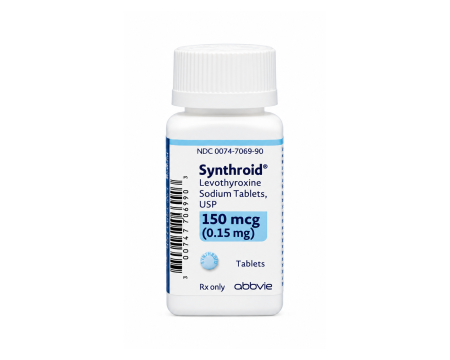


Drug Info
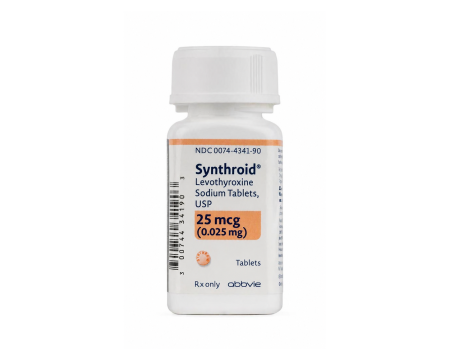
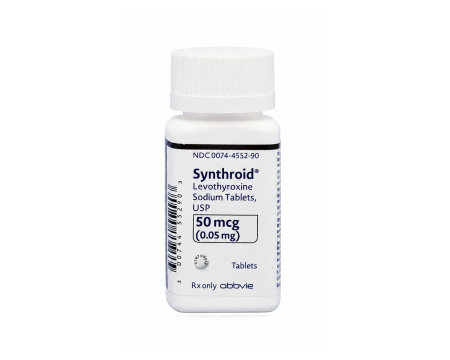
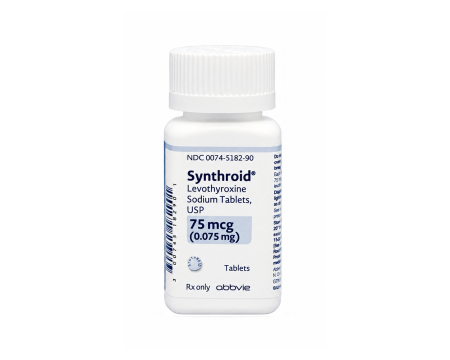
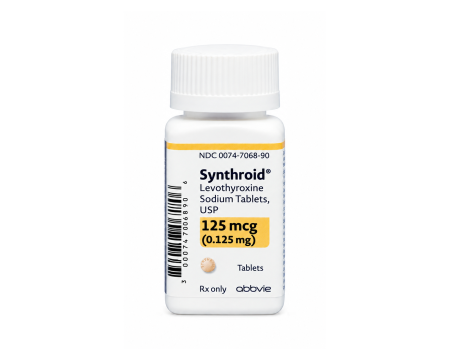
- Brand Name: Synthroid
- Active Ingredient: Levothyroxine sodium (T4)
- Manufacturer: AbbVie Inc.
Synthroid and its active substance, Levothyroxine
Levothyroxine is converted in peripheral tissues to triiodothyronine (T3), the more active hormone that binds nuclear thyroid receptors and regulates transcription of genes controlling metabolic rate, oxygen consumption, and development. Even when little endogenous T4 is produced, peripheral deiodinases can generate sufficient T3 from the administered T4 to meet physiologic needs. This is why levothyroxine monotherapy is the standard of care for most patients with hypothyroidism.
Pharmacokinetically, oral levothyroxine has variable but predictable absorption when taken in a standardized way. Bioavailability is optimized by fasting administration and is reduced by calcium, iron, magnesium/aluminum antacids, bile-acid binders, and some foods and beverages (notably coffee) if taken too close to the dose. The hormone is highly protein-bound in plasma and has a long half-life (about 7 days in euthyroid adults), which supports once-daily dosing but also means dose adjustments take several weeks to fully manifest in TSH. Hepatic and renal pathways handle distribution and clearance; no cytochrome P450 metabolism is required for activation.
Therapeutic goals differ. In replacement therapy, the aim is to normalize TSH within target range (often 0.5–4.0 mIU/L, individualized). In TSH suppression for differentiated thyroid cancer, lower TSH targets may be set by the oncologic/endocrine team. Older adults and those with coronary disease require gentler titration to avoid precipitating angina or arrhythmia from rapid metabolic upshifts.
Indications for use
Use is determined by your clinician according to regional labeling and guidelines. Common indications include:
- Primary hypothyroidism (autoimmune thyroiditis/Hashimoto’s, post-radioiodine or post-surgery)
- Secondary/tertiary hypothyroidism (pituitary or hypothalamic disease)
- TSH suppression in differentiated thyroid cancer management
- Adjunct in goiter prevention when indicated by specialist assessment
Treatment regimens and dosages
Use Synthroid exactly as prescribed. Typical adult oral regimens (clinician-directed):
- Full replacement (otherwise healthy adults <60 years): ~1.6 mcg/kg/day (actual body weight), rounded to the nearest tablet strength; titrate by 12.5–25 mcg every 4–6 weeks to target TSH.
- Older adults or known coronary disease: start 12.5–25 mcg/day, increase in 12.5–25 mcg steps every 6–8 weeks with ECG/symptom monitoring.
- Subclinical hypothyroidism or partial replacement: individualized low starting dose with slower titration.
- TSH suppression (thyroid cancer): higher doses may be required; specialist sets targets and schedule.
Administration rules (consistency is key):
- Take once daily on an empty stomach with water, ideally first thing in the morning.
- Wait 30–60 minutes before eating or drinking coffee.
- Separate from calcium/iron/magnesium, aluminum antacids, bile-acid binders, sucralfate, and orlistat by ≥4 hours.
- If morning dosing is difficult, taking it at bedtime ≥3–4 hours after the last meal is an accepted alternative—keep the timing the same every day.
- Stay on the same brand/formulation where possible; if changed, recheck TSH in 6 weeks.
Recommendations for use
Create a simple routine: place the tablet by your bedside with a glass of water, set a reminder, and avoid food/coffee until the wait time passes. Keep a list of all medicines and supplements; share it at each visit so your clinician can adjust intervals or the dose. If pregnancy is planned or occurs, contact your clinician immediately—most patients need a dose increase early in pregnancy to maintain target TSH. For infants/children (specialist-directed), crushing tablets and mixing with a small amount of water or breast milk may be used; avoid soy-based formulas near dosing due to absorption issues.
Missed Dose
If you miss a dose, take it as soon as you remember the same day. If you do not remember until the next day, do not double; resume the regular schedule. Because of the long half-life, one missed tablet is usually not critical. If several doses are missed, notify your clinician; temporary adjustments may be considered.
Precautions
- Boxed warning: thyroid hormones must not be used for weight loss or obesity treatment in euthyroid patients. Large doses, especially with sympathomimetics, can cause serious or life-threatening effects.
- Cardiovascular: over-replacement may provoke angina, arrhythmias, palpitations, or elevated blood pressure—titrate cautiously in older adults or those with coronary disease.
- Bone health: chronic over-replacement increases osteoporosis risk; maintain calcium/vitamin D intake and periodic TSH checks.
- Adrenal insufficiency: untreated adrenal failure must be corrected before starting levothyroxine to prevent adrenal crisis.
- Diabetes: dose changes can alter insulin/oral antidiabetic needs—monitor glucose during titration.
- Malabsorption states: celiac disease, atrophic gastritis, H. pylori, or post-bariatric surgery can reduce absorption; your clinician may adjust dose or consider alternative formulations.
- Pediatrics/elderly: specialist-directed dosing and close monitoring.
Use during pregnancy
Levothyroxine is safe and recommended in pregnancy for maternal hypothyroidism. Requirements typically increase (often by 20–30% or more), and TSH is monitored every 4 weeks in the first half of pregnancy, then less often once stable. Do not stop during pregnancy. For breastfeeding, levothyroxine is compatible; it restores normal maternal physiology and only minimal amounts pass into milk.
Possible side effects
When dosed correctly, Synthroid is well tolerated. Symptoms of over-replacement can include palpitations, nervousness, tremor, heat intolerance, sweating, insomnia, weight loss, diarrhea, and menstrual irregularities. Under-replacement presents with persistent hypothyroid symptoms (fatigue, cold intolerance, constipation, dry skin). Rare hypersensitivity to excipients may cause rash or GI upset; changing formulation can help.
Levothyroxine: interaction with other drugs
- Binding/absorption reducers: calcium, iron, magnesium/aluminum antacids, bile-acid sequestrants (cholestyramine/colestipol), sevelamer, sucralfate, orlistat, soy and high-fiber meals near dosing → separate by ≥4 hours.
- Acid suppression: PPIs/H2 blockers and conditions with low stomach acid can reduce absorption; dose adjustment or timing strategy may be needed.
- Enzyme inducers: rifampin, carbamazepine, phenytoin, sertraline (and some SSRIs) can increase clearance—monitor TSH.
- Estrogens (including OCPs/HRT): raise TBG, increasing levothyroxine requirements.
- Warfarin/coumarins: restoring euthyroidism can increase INR—monitor and adjust.
- Sympathomimetics: additive cardiac effects—use caution.
Always provide a complete list of prescription/OTC medicines, vitamins, and herbal supplements.
Analogs & Generics
Same active ingredient (levothyroxine — international examples)
- Euthyrox (Merck KGaA) — levothyroxine tablets in multiple strengths
- Levoxyl (Pfizer) — levothyroxine tablets
- Tirosint (IBSA) — soft-gel capsules (fewer excipients; useful in absorption issues)
- Tirosint-SOL — oral solution levothyroxine
- Levothyroxine sodium tablets (Teva, Sandoz/Hexal, Accord/Actavis, Viatris/Mylan, Aurobindo/Lupin/Dr. Reddy’s) — common generics
- Available in our catalog: Synthroid Generic — levothyroxine tablets in multiple strengths
Drug analogs (different active ingredient, same purpose — thyroid hormone therapy)
- Liothyronine (T3) — selected cases requiring T3; short half-life, specialist-directed
- Desiccated thyroid extract — mixed T4/T3; use is individualized and clinician-supervised
Storage
Store at 15–25°C in a dry place away from heat and sunlight. Keep tablets in the original blister/bottle to protect from moisture and light. Do not use after the expiry date printed on the pack. Keep out of reach of children.
Customer Experience – What to Expect
Most patients notice gradual improvement in energy, mood, skin and hair texture, bowel regularity, and temperature tolerance over 2–6 weeks as levels normalize. Heart rate and cholesterol often improve with sustained euthyroidism. If palpitations, anxiety, or insomnia appear after an increase, they usually signal too much hormone—contact your clinician for dose review. Keeping a brief diary of dose time, meals/coffee, supplements, and symptoms helps explain any lab–symptom mismatch and speeds stabilization.
FAQ
How should I take Synthroid for best absorption?
On an empty stomach with water, then wait 30–60 minutes before breakfast or coffee. Separate from minerals and certain medicines by ≥4 hours.
Do I have to stay on the same brand?
Yes—consistency reduces variability. If the brand/formulation changes, repeat TSH testing after 6 weeks.
I’m pregnant or planning pregnancy—what should I do?
Contact your clinician promptly; most patients need a dose increase early in pregnancy. Close TSH monitoring keeps both mother and baby safe.
Can I use Synthroid for weight loss?
No. Thyroid hormones must not be used for weight loss in people with normal thyroid function; misuse can be dangerous.
What if I drink coffee early in the morning?
Coffee can reduce absorption if taken too soon. Either delay coffee 60 minutes after the dose or consider consistent bedtime dosing (≥3–4 hours after the last meal).
How often are labs checked?
Typically every 4–6 weeks during titration, then every 6–12 months once stable—more often if medications, weight, or health status change.
The best offer for Synthroid online on the market
Right now you can buy Synthroid in our online pharmacy. If you are looking for the best place to order Synthroid or other medicines containing levothyroxine, then you have come to the right place.
Advantages of our pharmacy:
- Confidentiality. Most people prefer to keep endocrine treatment private. By ordering Synthroid online, you avoid unnecessary face-to-face discussions.
- Price. Buying Synthroid online is more beneficial than purchasing at a clinic or local pharmacy.
- Quantity. Doctors often issue a prescription for one or two packs. Our pharmacy allows you to buy the required number of Synthroid packs to ensure an adequate supply.
- Convenience. You make a purchase at a convenient time for you, without sacrificing service or security. You do not need to make an appointment or visit a clinic.
- Information. On our website, you can find details on dosage, side effects, safe use, and other information necessary for treatment.
We work hard to provide the best possible customer service and to ensure that our medications help restore and maintain healthy thyroid function under medical supervision.









