

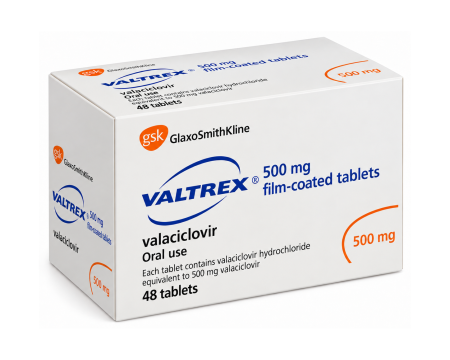
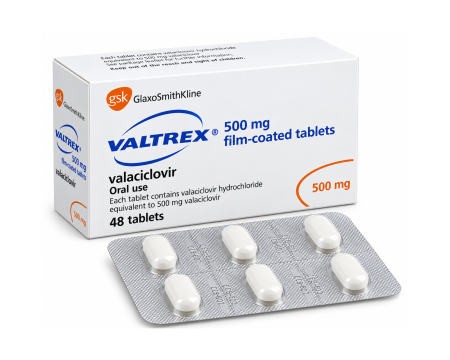
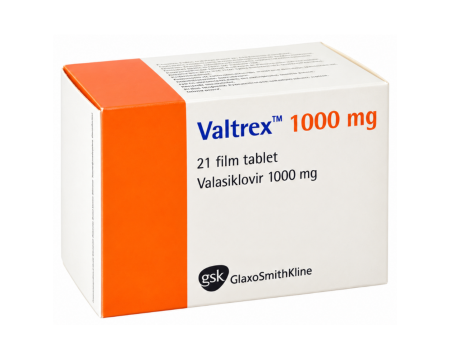


Drug Info
- Brand Name: Valtrex
- Active Ingredient: Valacyclovir Hydrochloride
- Manufacturer: GlaxoSmithKline (GSK)
Valtrex and its active substance, Valacyclovir Hydrochloride
Valacyclovir is the L-valyl ester prodrug of acyclovir designed to improve oral bioavailability. After absorption, it is rapidly hydrolyzed to acyclovir and L-valine. In herpes-infected cells, viral thymidine kinase converts acyclovir to the monophosphate, which is then triphosphorylated by host enzymes. Acyclovir triphosphate competitively inhibits viral DNA polymerase and causes chain termination, selectively impairing viral replication over host DNA synthesis.
Pharmacokinetics: compared with oral acyclovir, valacyclovir achieves higher acyclovir plasma levels with fewer daily doses. Elimination is renal via glomerular filtration and active tubular secretion. Cimetidine or probenecid can reduce renal tubular secretion and increase acyclovir exposure; dose spacing and hydration mitigate risk. In renal impairment and in older adults with reduced creatinine clearance, dosing must be adjusted to avoid neurotoxicity (e.g., agitation, confusion) or kidney effects.
Tolerability: Valtrex is generally well tolerated. Headache and gastrointestinal upset are the most common effects. In immunocompromised patients receiving high doses, rare TTP/HUS (thrombotic thrombocytopenic purpura/hemolytic uremic syndrome) has been reported—specialist oversight is essential.
Indications for use
Use is determined by the prescriber according to regional labeling and individual assessment. Common indications include:
- Herpes labialis (cold sores) in adults and adolescents
- Genital herpes (HSV-2/HSV-1) — initial episodes, episodic treatment of recurrences, and suppressive therapy to reduce recurrences and transmission risk
- Herpes zoster (shingles) in adults
- Varicella (chickenpox) in selected patients per clinician judgment and regional guidance
- HSV prophylaxis/treatment in immunocompromised patients under specialist care
Treatment regimens and dosages
Use Valtrex exactly as prescribed. Representative adult oral regimens (the prescriber will tailor dose, timing, and duration; adjust in renal impairment):
- Cold sores (herpes labialis):
2 g at first sign of a cold sore, then 2 g 12 hours later (total 1 day). - Genital herpes — first episode:
1 g twice daily for 10 days. - Genital herpes — episodic treatment of recurrences:
Start at first symptoms. Common options: 500 mg twice daily for 3 days or 1 g once daily for 5 days. - Genital herpes — suppressive therapy (recurrence reduction):
500 mg once daily (for ≤9 recurrences/year) or 1 g once daily (for frequent recurrences). - Reduction of HSV-2 transmission to a discordant partner (with safer-sex practices):
500 mg once daily. - Herpes zoster (shingles):
1 g three times daily for 7 days, ideally started within 72 hours of rash onset. - Varicella (adult, clinician-selected):
1 g three times daily for 5–7 days (regional practices vary).
Renal dosing: prescribers reduce dose and/or extend intervals based on creatinine clearance. Maintain adequate hydration. In dialysis, specialist schedules apply.
Administration: swallow tablets with water; with or without food. Begin as early as possible at the first signs of an outbreak.
Recommendations for use
- Keep a personal action plan for episodic therapy: store a small supply and take the first dose at the earliest prodrome.
- For suppressive therapy, set daily reminders to maintain consistent dosing; review the plan every 6–12 months with your clinician.
- For shingles, start promptly and protect the rash area to reduce spread; avoid contact with people who are pregnant, newborns, or immunocompromised until lesions are crusted.
- Maintain hydration (especially in hot weather or with exercise).
- Practice safer sex (condoms, no sexual contact during symptomatic outbreaks) even on suppressive therapy.
Missed Dose
Take the missed dose when remembered unless it is close to the next dose. Do not double doses. Resume your regular schedule. For single-day cold-sore therapy, contact your clinician if you miss the second dose by many hours.
Precautions
- Kidney function: adjust dose in renal impairment; ensure hydration.
- Elderly/fragile patients: higher risk of CNS effects with accumulation—report confusion, agitation, or hallucinations.
- Immunocompromised patients: high-dose or prolonged courses require close monitoring; rare TTP/HUS has been reported.
- Allergy: avoid if hypersensitive to valacyclovir, acyclovir, or excipients.
- Avoid spreading HSV/VZV: even without lesions, viral shedding can occur—combine medication with protective behaviors.
- Driving/alert tasks: dizziness or fatigue can occur; assess individual response.
Use during pregnancy
Decisions are individualized. A large body of clinical experience with acyclovir/valacyclovir has not shown a consistent increase in birth-defect risk; many clinicians use valacyclovir for maternal HSV management when benefits outweigh risks. If you are pregnant, planning pregnancy, or breastfeeding, discuss options with your clinician (including late-pregnancy suppressive therapy for recurrent genital HSV to reduce outbreak risk at delivery). Small amounts may enter breast milk; infant monitoring for GI upset is prudent.
Possible side effects
- Common: headache, nausea, abdominal pain, dizziness, fatigue.
- Less common: diarrhea, pruritus, rash, photosensitivity.
- Rare/serious (seek care): confusion, agitation, hallucinations (especially with renal impairment/elderly), decreased urine output, unusual bruising or pallor (possible hematologic issues), severe allergic reaction (wheeze, facial swelling), signs of TTP/HUS (fever, bruising, confusion).
Record timing and severity; hydration and renal-dose adjustment reduce many tolerability issues.
Valacyclovir: interaction with other drugs
- Probenecid, cimetidine: may increase acyclovir levels by reducing tubular secretion—usually manageable; monitor in renal impairment.
- Nephrotoxic agents (e.g., high-dose NSAIDs, cyclosporine, tacrolimus, aminoglycosides, amphotericin B, tenofovir): additive kidney risk—ensure monitoring and hydration.
- Mycophenolate mofetil: mutual increases in exposure have been noted—clinician monitoring advised.
- Live attenuated varicella/zoster vaccines: antivirals may reduce vaccine replication—follow vaccine guidance on temporary interruption.
Always provide your clinician with a complete list of prescription/OTC medicines, vitamins, and herbal supplements.
Analogs & Generics
Same active ingredient (valacyclovir — international examples)
- Valacyclovir tablets (Teva) — 500 mg, 1 g
- Valacyclovir tablets (Sandoz/Hexal) — standard strengths
- Valacyclovir tablets (Viatris/Mylan) — film-coated presentations
- Valacyclovir tablets (Accord/Actavis) — region-specific packs
- Valacyclovir tablets (Aurobindo/Lupin/Dr. Reddy’s) — widely used generics
Drug analogs (different active ingredient, same purpose — HSV/VZV antivirals)
- Acyclovir — oral/IV; foundational HSV/VZV therapy
- Famciclovir — oral prodrug of penciclovir for HSV/shingles
- Penciclovir cream — topical for cold sores (symptomatic relief)
- Docosanol (topical; OTC in some regions) — cold-sore symptom relief
- Brivudine (regional availability) — shingles antiviral in selected markets; important drug interactions (e.g., with fluoropyrimidines)
Storage
Store at 15–25°C in a dry place away from heat and sunlight. Keep tablets in the original packaging and out of the reach of children. Do not use after the expiry date printed on the blister/carton.
Customer Experience – What to Expect
- Cold sores: when taken at the first prodrome, many users see faster healing and shorter pain duration with the 1-day regimen.
- Genital herpes (episodic): earlier dosing leads to milder, shorter outbreaks; keeping medicine on hand helps start promptly.
- Suppressive therapy: daily dosing often reduces outbreak frequency substantially and can lower transmission risk when combined with safer-sex practices.
- Shingles: starting within 72 hours of rash onset typically reduces acute pain and may decrease the risk of prolonged neuralgia.
Headache or mild nausea may occur at the start and often settle with food and hydration. Keep a brief log of outbreak timing, triggers, and response—this helps your clinician fine-tune the plan.
FAQ
How soon should I start Valtrex?
As early as possible—ideally at prodrome or first lesions. Early start improves outcomes.
Can Valtrex prevent transmission to my partner?
Daily 500 mg can reduce (not eliminate) HSV-2 transmission risk when combined with condoms and no sex during outbreaks.
Do I need to adjust the dose for kidney problems?
Yes. Your clinician will reduce dose and/or extend intervals based on creatinine clearance.
Is it safe long term?
Many people use suppressive regimens long term with periodic reviews. Ongoing monitoring focuses on kidney function and tolerability.
Can I drink alcohol?
Moderation is advised; alcohol can worsen dehydration and headaches.
What if I’m taking NSAIDs or other nephrotoxic drugs?
There may be additive kidney risk—ensure hydration and discuss monitoring with your clinician.
The best offer for Valtrex online on the market
Right now you can buy Valtrex in our online pharmacy. If you are looking for the best place to order Valtrex or other medicines containing valacyclovir, then you have come to the right place.
Advantages of our pharmacy:
- Confidentiality. Most people prefer to keep antiviral treatment private. By ordering Valtrex online, you avoid unnecessary face-to-face discussions.
- Price. Buying Valtrex online is more beneficial than purchasing at a clinic or local pharmacy.
- Quantity. Doctors often issue a prescription for one or two packs. Our pharmacy allows you to buy the required number of Valtrex packs to ensure an adequate supply.
- Convenience. You make a purchase at a convenient time for you, without sacrificing service or security. You do not need to make an appointment or visit a clinic.
- Information. On our website, you can find details on dosage, side effects, safe use, and other information necessary for treatment.
We work hard to provide the best possible customer service and to ensure that our medications help manage herpes simplex and shingles safely and effectively under medical supervision.









