



Drug Info
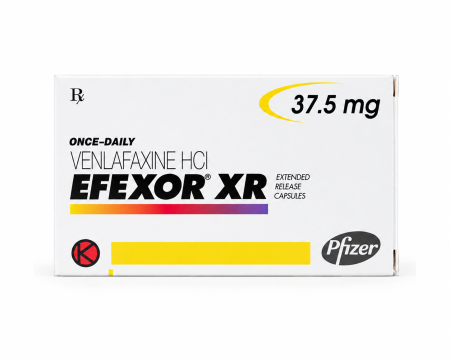
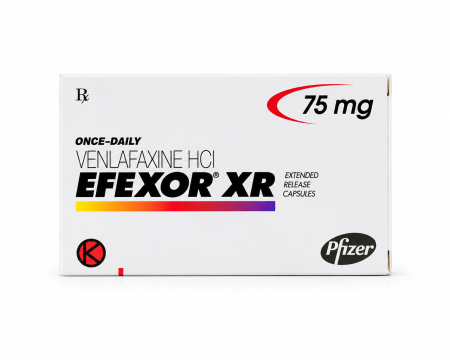
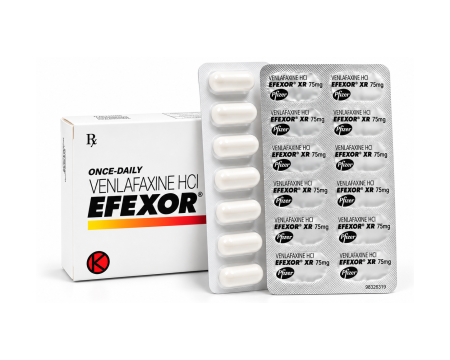
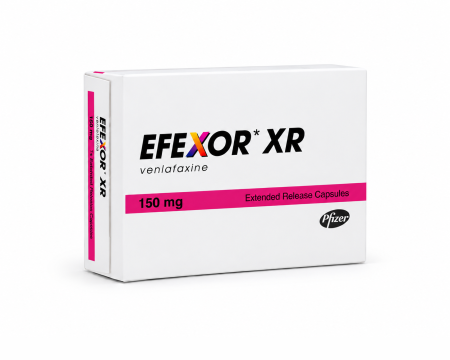
- Brand Name: Effexor XR
- Active Ingredient: Venlafaxine Hydrochloride
- Manufacturer: Pfizer Inc.
Active substance Venlafaxine Hydrochloride
Venlafaxine inhibits neuronal reuptake of serotonin (5-HT) and norepinephrine (NE) in a dose-dependent manner, with relatively greater serotonergic activity at lower doses and increasing noradrenergic contribution at higher doses. The extended-release (XR) formulation provides controlled delivery over 24 hours, which reduces peak-to-trough fluctuation and allows once-daily dosing.
Following oral administration, venlafaxine hydrochloride is extensively converted to desvenlafaxine (its active metabolite) primarily via CYP2D6. Both venlafaxine and desvenlafaxine contribute to clinical effect. The elimination is primarily renal for both compounds. Food has minimal impact on overall exposure; taking the capsule with food may reduce nausea in sensitive patients. Capsules should be swallowed whole; do not divide, crush, or chew. Some XR capsules may be opened and sprinkled on a small amount of applesauce only if the specific product labeling allows it; otherwise, keep the capsule intact to preserve controlled release.
Tolerability is generally predictable. Common early effects include nausea, dry mouth, sweating, insomnia or somnolence, and mild blood-pressure rise at higher doses. Gradual titration and consistent administration time help reduce adverse effects. Because SNRIs can increase blood pressure and heart rate, periodic monitoring is recommended, especially in patients with pre-existing hypertension or cardiovascular disease.
Indications for use
- Major depressive disorder (MDD) in adults
- Generalized anxiety disorder (GAD) in adults
- Social anxiety disorder (SAD) in adults
- Panic disorder in adults (prescriber-directed dosing and titration)
Use is determined by the prescriber according to local labeling and individual clinical assessment.
Treatment regimens and dosages
Use Effexor XR exactly as prescribed. Representative once-daily adult schedules:
- MDD / GAD / SAD (typical initiation):
Start at 37.5–75 mg once daily with food. Increase by 75 mg/day increments at intervals of 4–7 days based on response and tolerability. Usual effective range: 75–225 mg once daily. - Panic disorder (conservative initiation):
37.5 mg once daily for 7 days, then increase to 75 mg once daily. Further increases by 75 mg/day at ≥7-day intervals as needed. Typical range 75–225 mg/day.
General rules:
- Take the dose at the same time each day (morning is common if insomnia occurs; evening may suit patients with daytime somnolence).
- Do not exceed the maximum daily dose set by your prescriber.
- Renal impairment: dose reduction or extended titration intervals may be required.
- Hepatic impairment: lower target doses and cautious titration are recommended.
- Do not abruptly stop; taper gradually (see Recommendations).
Assess benefit over several weeks. If the response is partial, the prescriber may adjust the dose, optimize adherence timing, address sleep or activation effects, or consider adjunctive measures.
Recommendations for use
- Take Effexor XR once daily with food to improve GI tolerability.
- Establish a dosing routine (phone alarm, pill organizer).
- Monitor blood pressure and pulse periodically, especially during titration and at higher doses.
- If insomnia occurs, avoid caffeine late in the day and consider morning dosing; if somnolence is prominent, discuss evening dosing with your clinician.
- Avoid unnecessary alcohol and sedatives; these may worsen CNS effects.
- Keep a simple symptom diary (sleep, energy, anxiety peaks, mood ratings, side effects). This helps your clinician fine-tune dosing and evaluate benefit.
- Discontinuation: when therapy is complete or a switch is planned, taper gradually over 1–2 weeks or longer depending on dose and duration to minimize discontinuation symptoms (dizziness, irritability, sensory disturbances, headache, nausea).
Missed Dose
If you miss a dose, take it when remembered unless it is close to the next dose. Do not take two doses at once. Resume the regular schedule. If multiple doses are missed and withdrawal-type symptoms appear, contact your clinician for a short tapering plan.
Precautions
- Suicidal ideation: antidepressants may increase the risk of suicidal thoughts in young adults at treatment initiation and after dose changes. Close monitoring is advised, particularly during the first weeks and after titrations.
- Hypertension / tachycardia: venlafaxine can increase blood pressure and heart rate, especially at higher doses. Monitor regularly; treat hypertension before initiation when possible.
- Serotonin syndrome: risk increases with concomitant serotonergic agents (see Interactions). Seek urgent care for agitation, confusion, fever, sweating, tremor, diarrhea, or muscle rigidity.
- Mania/hypomania: use with caution in bipolar spectrum disorders; screen for a history of manic episodes.
- Seizure risk: use carefully in patients with seizure disorders.
- Angle-closure glaucoma: mydriasis may precipitate an attack in susceptible individuals; consider ophthalmic evaluation if risk factors exist.
- Hyponatremia/SIADH: monitor in elderly patients, those on diuretics, or with low baseline sodium.
- Bleeding risk: SNRIs can increase bleeding tendency, especially with NSAIDs, aspirin, or anticoagulants.
- Pediatric and geriatric considerations: pediatric efficacy/safety vary by region; in older adults, start low and titrate cautiously.
Use during pregnancy
Decisions are individualized. Antidepressant therapy during pregnancy balances maternal mental-health needs with fetal considerations. Late-pregnancy exposure to SNRIs/SSRIs has been associated with neonatal adaptation symptoms (e.g., irritability, respiratory distress, feeding difficulties). If you are pregnant, planning pregnancy, or become pregnant during treatment, contact your clinician to discuss options (continuation with monitoring, dose adjustments, or alternative strategies). Venlafaxine passes into breast milk; breastfeeding requires individualized risk–benefit discussion and infant monitoring for sedation, feeding, and weight gain.
Possible side effects
- Common: nausea, dry mouth, constipation, decreased appetite, sweating, dizziness, somnolence or insomnia, tremor, nervousness, sexual dysfunction (decreased libido, delayed orgasm), mild BP elevation.
- Less common: blurred vision, mydriasis, palpitations, increased cholesterol, weight change, agitation.
- Serious (seek medical care): signs of serotonin syndrome; sustained hypertension or tachyarrhythmia; severe mood worsening or suicidality; seizures; angle-closure glaucoma symptoms (eye pain, vision changes); severe allergic reaction (swelling, wheeze, rash).
Record onset, severity, and relation to dose timing; this information helps the clinician decide on dose adjustment, slower titration, or supportive measures.
Venlafaxine: interaction with other drugs
- MAO inhibitors (e.g., phenelzine, tranylcypromine), linezolid, IV methylene blue: contraindicated—risk of serotonin syndrome. Observe appropriate washout periods when switching.
- Other serotonergic agents: SSRIs/SNRIs, triptans, tramadol, fentanyl, dextromethorphan, St. John’s wort, lithium—additive serotonin effects; monitor closely and educate on warning signs.
- CYP2D6 inhibitors (e.g., paroxetine, fluoxetine, quinidine, bupropion): may increase venlafaxine exposure and alter metabolite ratios; dose adjustments or slower titration may be needed.
- CYP3A4 inhibitors/inducers: strong inhibitors or inducers can modestly affect levels; prescriber will assess clinically.
- Anticoagulants/antiplatelets/NSAIDs: increased bleeding risk; monitor for bruising or GI bleeding.
- Alcohol and CNS depressants: may worsen sedation or dizziness; minimize use.
- Drugs affecting sodium balance (e.g., diuretics): increased risk of hyponatremia in susceptible patients.
Always provide your clinician with an up-to-date list of prescription/OTC medicines, vitamins, and herbal supplements.
Analogs & Generics
Same active ingredient (venlafaxine extended-release — international examples)
- Venlafaxine XR capsules (Teva) — 37.5 mg, 75 mg, 150 mg
- Venlafaxine XR capsules (Sandoz/Hexal) — commonly used strengths
- Venlafaxine XR capsules (Viatris/Mylan) — once-daily presentations
- Venlafaxine XR capsules (Accord/Actavis) — region-specific packs
- Venlafaxine XR capsules (Lupin/Aurobindo) — standard strengths per local labeling
Drug analogs (different active ingredient, same purpose — antidepressant/anxiolytic therapy)
- Desvenlafaxine (e.g., Pristiq) — SNRI related to venlafaxine
- Duloxetine (e.g., Cymbalta) — SNRI for depression and anxiety disorders
- Sertraline (e.g., Zoloft) — SSRI used for depression and anxiety
- Escitalopram (e.g., Lexapro) — SSRI with anxiolytic profile
- Bupropion (e.g., Wellbutrin) — norepinephrine–dopamine reuptake inhibitor (non-serotonergic alternative)
Storage
Store at 15–25°C in a dry place away from direct heat and sunlight. Keep capsules in the original packaging and out of the reach of children. Do not use after the expiry date printed on the pack.
Customer Experience – What to Expect
Many patients notice early changes within 1–2 weeks (improved sleep continuity, reduced somatic anxiety), with broader mood and function gains over 2–6 weeks as the dose is optimized. Nausea or lightheadedness can occur at initiation and often lessens after several days with food-time dosing. Some experience activation (restlessness, insomnia) or sedation; adjusting the dosing time (morning vs evening), limiting caffeine late in the day, and maintaining regular sleep–wake cycles can help. Mild blood-pressure increases are usually asymptomatic but underline the importance of periodic checks. Keep a short daily log (dose time, mood/anxiety ratings, sleep hours, side effects); this supports precise titration and shared decisions at follow-up. If discontinuation is planned, a gradual taper minimizes withdrawal-type symptoms.
FAQ
How long until Effexor XR starts to work?
Initial benefit can appear in 1–2 weeks, with fuller effect over 2–6 weeks. Continue as prescribed and attend follow-up to assess progress.
What time of day should I take it?
Once daily, with food, at a consistent time. Morning suits patients with insomnia; evening may suit those with daytime drowsiness—confirm with your clinician.
Can it raise blood pressure?
Yes, especially at higher doses. Your clinician may recommend regular BP checks and dose adjustments if needed.
What happens if I miss a dose?
Take it when remembered unless near the next dose. Do not double. If withdrawal-type symptoms occur, contact your clinician.
Is alcohol allowed?
Best minimized. Alcohol can worsen dizziness, sedation, and judgment.
Do I need to taper when stopping?
Yes. Taper gradually under medical supervision to reduce discontinuation symptoms.
The best offer for Effexor XR online on the market
Right now you can buy Effexor XR in our online pharmacy. If you are looking for the best place to order Effexor XR or other medicines containing venlafaxine, then you have come to the right place.
Advantages of our pharmacy:
- Confidentiality. Most people prefer to keep mental-health treatment private. By ordering Effexor XR online, you avoid unnecessary face-to-face discussions.
- Price. Buying Effexor XR online is more beneficial than purchasing at a clinic or local pharmacy.
- Quantity. Doctors often issue a prescription for one or two packs. Our pharmacy allows you to buy the required number of Effexor XR packs to ensure an adequate supply.
- Convenience. You make a purchase at a convenient time for you, without sacrificing service or security. You do not need to make an appointment or visit a clinic.
- Information. On our website, you can find details on dosage, side effects, safe use, and other information necessary for treatment.
We work hard to provide the best possible customer service and to ensure that our medications help relieve depressive and anxiety symptoms safely and effectively.









